| Elevation / style | 1,100–1,600 m |
|---|---|
| Cultivar | Mixed local cultivars |
| Common processing | Wet-hulled / Giling Basah |
| Flavor tendencies | Herbal, cedar, dark cocoa, syrupy body |
| Suggested brewer | French press |
| Starting ratio | 1:15 |
| Water temperature | 91–94°C |
| Grind | Coarse to medium-coarse |
Mandheling and wet-hulled processing
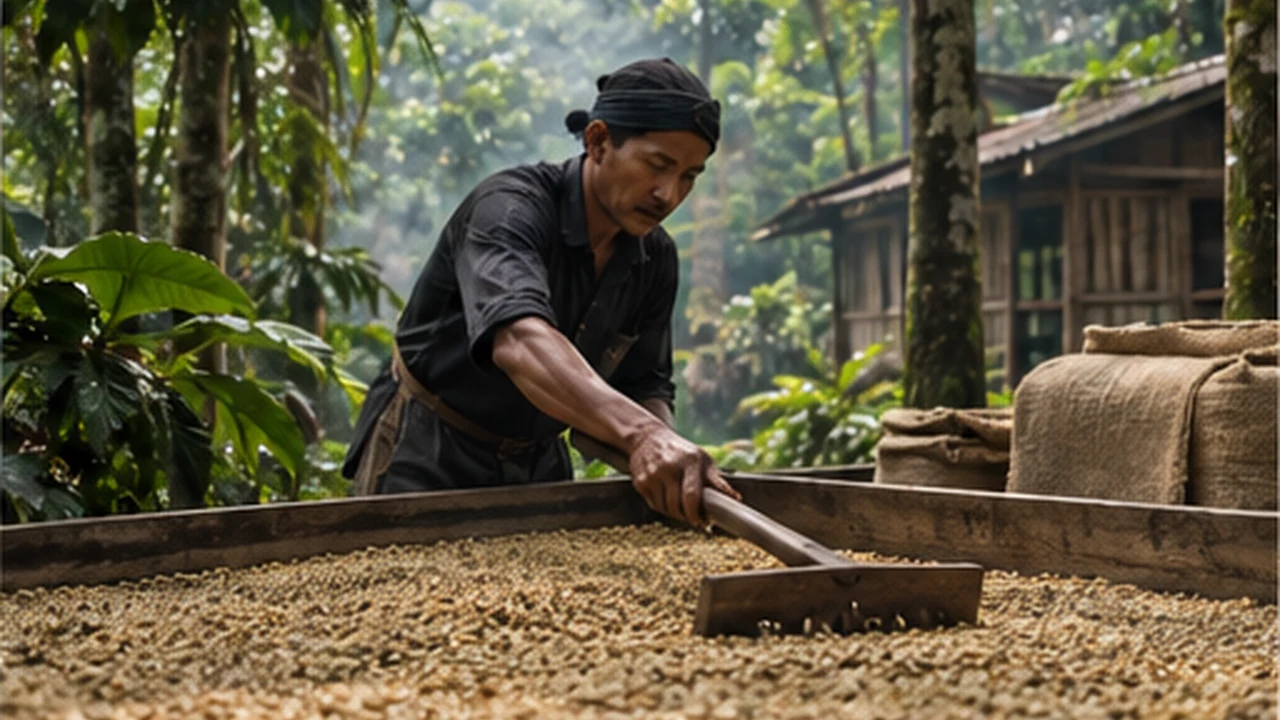
Mandheling is a trade name associated with coffees from northern Sumatra rather than a single botanical variety. Sellers often use it for coffees processed by giling basah, or wet hulling. In this method, parchment is removed at a higher moisture level than in conventional fully dried parchment processing. Particular lots may be described as herbal, spicy, earthy or syrupy, but clean specialty examples can be more varied than that shorthand suggests.
“Earthy” should not automatically be taken to mean defective or moldy. Conversely, musty or mold-like off-flavors are not a regional requirement to celebrate. Processing, storage and roasting influence the final cup; a transparent importer or roaster should be able to explain what is known about the lot.
An immersion method that separates texture and extraction
For a medium roast, begin with 24 g coffee and 360 g water in a French press, around 93°C. Grind coarsely, stir just enough to wet the grounds, steep for four minutes and gently break the crust. Let sediment settle briefly before pressing slowly and decanting immediately so brewing does not continue in the press.
- Measure both coffee and water. Taste for sweetness and a clean finish rather than assuming all Sumatran coffees must be heavy.
- If sediment dominates the flavor, let the coffee settle longer or pour through a paper filter after brewing.
- If it tastes empty and underdeveloped, adjust grind a step finer on the next batch.
- If it tastes overly intense but balanced, add a measured small amount of water to the served cup.
Useful comparison: split the same French-press batch into two cups; paper-filter one portion and leave the other as is. This demonstrates the difference between suspended fines and dissolved flavor without changing beans, dose or steep time.
What to verify before buying
Look for a traceable region, producer or collection group, process and roast date. Verify whether “wet hulled” is actually stated; not every lot from Sumatra is processed alike. If the label supplies cultivar information, use the World Coffee Research catalog as a reference rather than assuming Mandheling itself is a variety.
For cold coffee, start from a separately designed cold-brew concentrate recipe. Do not simply cool this four-minute French-press brew and expect an identical result: temperature and extraction time are entirely different.
Limits and next steps
No particular harvest is reviewed here. For a repeatable method, keep a short brew log and change grind, not every recipe parameter at once. Our extraction guide explains why strength and extraction are distinct.