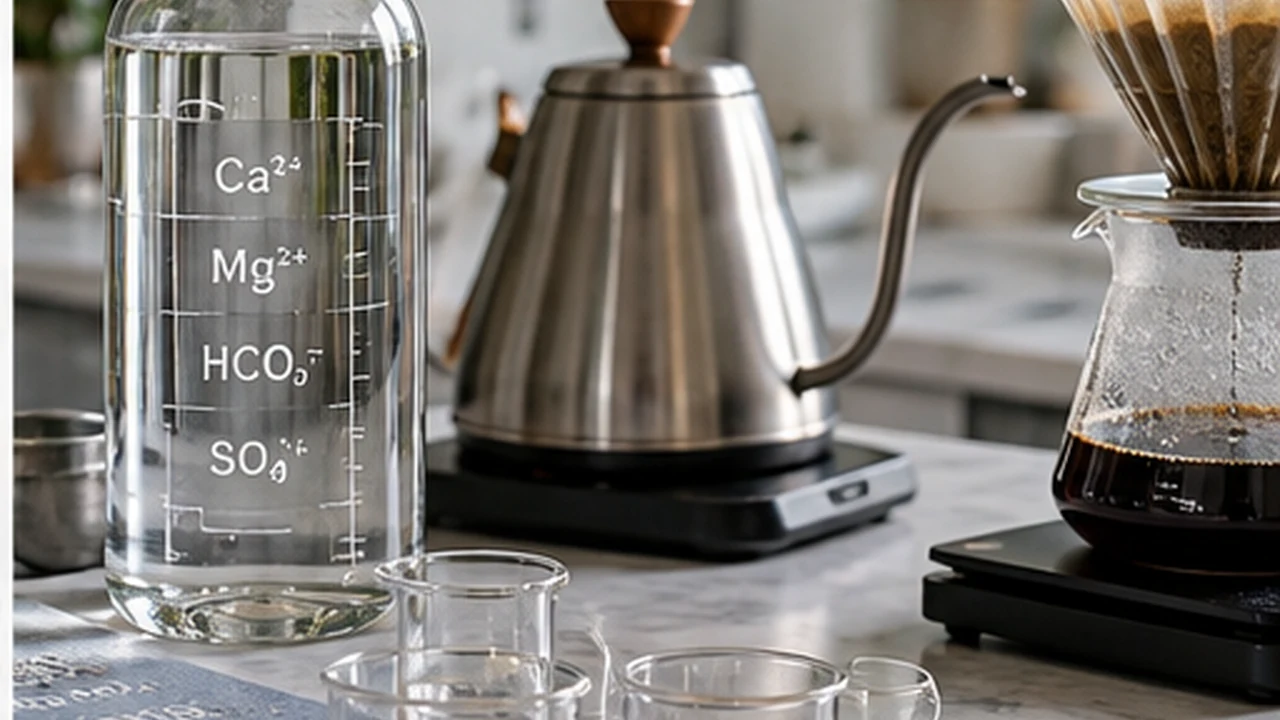
Hardness and alkalinity are different
General hardness is associated mainly with dissolved calcium and magnesium ions. Alkalinity describes the water’s acid-buffering capacity, commonly linked to bicarbonate. They influence coffee differently, so one “ppm” number cannot fully describe brewing water.
Magnesium
Magnesium can influence how water interacts with flavor-active compounds during extraction. In practice, water containing some magnesium often produces a lively cup, but the result depends on alkalinity, roast and brew method. Treat magnesium as one part of a complete water profile rather than a magic fruit-extraction switch.
Calcium
Calcium contributes to hardness and can support extraction, but high concentrations can also increase scale formation in heated equipment. Espresso-machine owners should prioritize manufacturer guidance because protecting boilers and valves can matter more than chasing a theoretical sensory optimum.
Bicarbonate and alkalinity
Alkalinity buffers acids. Very high alkalinity can flatten perceived acidity, while very low alkalinity can make bright coffees feel aggressive. The useful range depends on the coffee and method, and no single bicarbonate value is ideal for every cup.
A practical home approach
- Start with clean, pleasant-tasting water that is not extremely hard.
- If your kettle scales quickly, consider filtered or purpose-formulated brewing water.
- Change water only after your dose, grind and technique are reasonably stable.
- Keep espresso-machine warranty and maintenance requirements in mind.
Run a simple comparison
Brew the same coffee with two waters while keeping everything else constant. Taste blind if possible. Note sweetness, acidity, body and finish. This kind of direct comparison is more useful than optimizing mineral numbers without a sensory target.
Reading a water report without confusing the units
A label may report calcium and magnesium in mg/L as individual ions, total hardness in mg/L as calcium carbonate (CaCO₃), and alkalinity in the same CaCO₃-equivalent unit. Those figures are not interchangeable. A total dissolved solids (TDS) meter estimates conductivity-derived mineral content; it cannot tell you whether that number comes from hardness ions, sodium, bicarbonate or other dissolved substances.
| Label item | What it generally indicates | What it cannot establish by itself |
|---|---|---|
| Hardness (as CaCO₃) | Combined contribution of calcium and magnesium | Buffering capacity or taste preference |
| Alkalinity (as CaCO₃) | Acid-neutralizing / buffering capacity | How much calcium is present |
| Calcium / magnesium (mg/L) | Individual dissolved mineral concentrations | Complete water chemistry |
| TDS or conductivity | Broad estimate of total mineral load | A detailed breakdown of minerals |
A controlled two-water test
Choose two potable waters with different published mineral profiles and prepare identical 15 g / 250 g filter brews. Use the same beans, grinder setting, filters and pouring schedule; brew the waters in a randomized order if possible. Let both cups cool to similar temperatures before tasting. Write separate notes for acidity, sweetness, body and aftertaste and repeat once before drawing conclusions.
If water B produces a flatter cup, first check whether its stated alkalinity is higher; that is one plausible explanation, not a laboratory diagnosis. If you change water and grind at the same time you lose the ability to attribute the difference. For repeatability, photograph the bottle's mineral analysis or save the municipal report with your notes.
Filter coffee and espresso have different constraints
A kettle is often easy to descale; an espresso machine has narrow pathways, a boiler or thermoblock and manufacturer-specific water limits. Do not pour homemade mineral concentrates, reverse-osmosis water or distilled water into an espresso machine solely because a coffee recipe recommends them. Confirm the manual's permitted hardness, corrosion and filtration guidance first. For drinking safety, use potable water and a food-safe filtration system maintained according to its instructions.
Water chemistry cannot repair every problem. If two coffees taste poor with the same pleasant water, roast, freshness and grind may matter more than additional water experimentation. The extraction article explains why sourness and strength should be assessed separately.
Sources and limits
Use published mineral information from your water provider or manufacturer rather than guessed values. The Specialty Coffee Association publishes coffee education resources; equipment-specific requirements must come from your machine maker. We do not publish a universal mineral recipe or claim to have lab-tested the water available at a reader's address.