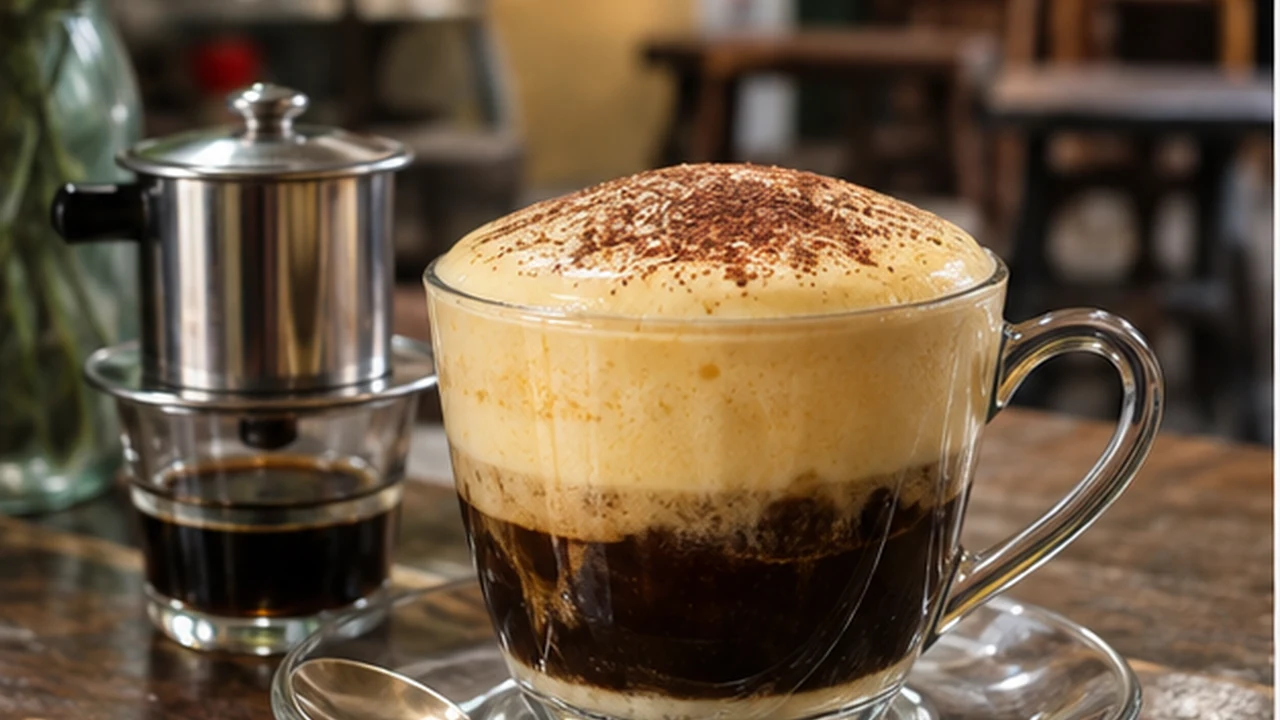
| Time | 12 minutes |
|---|---|
| Yield | 1 rich serving |
Ingredients and equipment
- 25 g dark-roasted coffee suitable for a phin; use the grind recommended for your filter
- About 90–110 g hot potable water, adjusted to the size of your phin
- One pasteurized egg yolk or pasteurized egg product suitable for uncooked recipes
- 15–20 g sweetened condensed milk
- Clean bowl, whisk or hand mixer, phin and heatproof serving glass
Prepare coffee and cream separately
- Preheat the cup. Add ground coffee to the phin and fit its press according to the manufacturer's instructions. Add a small amount of hot water to wet the coffee, then fill with the remaining water.
- Allow the coffee to drip through without forcing the press. Aim for a small, strong serving; different phins and grinds will change the brew time and final mass.
- In a clean bowl, whisk the pasteurized egg yolk with condensed milk until pale and thick enough to mound gently. Keep the mixture chilled until immediately before use if the coffee is still brewing.
- Pour coffee into the warm serving glass and spoon the cream over it. Serve promptly with a spoon so the drinker can taste the layers separately or combine them.
Make the sweetness and texture intentional
If the cream is too sweet, reduce condensed milk by 3–5 g in the next serving. If it falls straight through the coffee, whip longer with clean equipment and avoid adding extra liquid. If the coffee cannot be tasted beneath the topping, adjust the underlying brew strength or use a slightly smaller topping before adding more coffee powder.
Comparison to try: place a teaspoon of coffee in two cups, add a little cream to one and twice as much to the other, then taste before assembling the final glass. This distinguishes topping ratio from brew quality and prevents wasting a full recipe.
Food safety: important
Traditional versions may use raw yolk, but raw or lightly cooked eggs can carry pathogens. This recipe uses pasteurized egg products because the cream is not cooked to a safe temperature. Use clean utensils, avoid cross-contamination, keep ingredients refrigerated and drink promptly; hot coffee poured beneath cream does not reliably pasteurize it. Read the CDC guidance on safer egg choices for more detail.
This is a home adaptation of Vietnamese egg coffee, not a first-hand account of its origins or a definitive version of every Hanoi café's recipe. For the coffee base, a controlled brew ratio helps you compare attempts.