| Time | 8–12 hours |
|---|---|
| Yield | About 650 ml concentrate |
Ingredients and gear
- 60 g freshly ground coffee, medium grind to start (adjust to your tower's filter)
- 750 g clean, cold water including any ice used in the reservoir
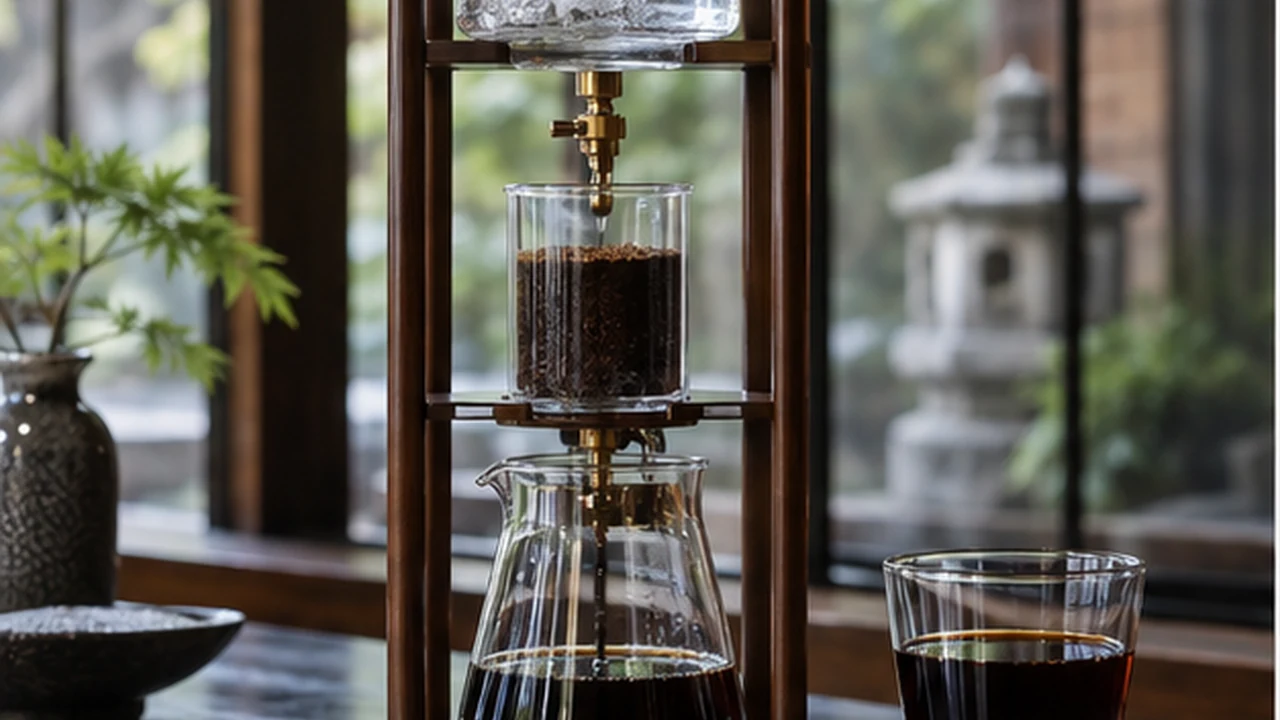
- A clean slow-drip tower or drip device with a controllable valve and a covered collection vessel
- Scale, timer and a refrigerator; optional orange peel only at serving
Method: control flow, not a mythical drip count
- Clean the water reservoir, coffee chamber, filter and collection vessel. Fill the reservoir with measured water and ice totaling 750 g.
- Level the coffee in its chamber without compacting it into a hard puck. Pre-wet if your tower's instructions recommend it so water does not tunnel down one edge.
- Start a slow, steady flow according to the device manufacturer's instructions. Watch the actual collected mass over time: drop size differs between valves, so one drop per second is not a universal flow standard.
- Check occasionally for a dry patch or channel; adjust the valve gently rather than continually disturbing the bed. Depending on your equipment, the collection may take roughly 8–12 hours.
- Cover and refrigerate the collected coffee promptly. Serve cold, optionally over fresh ice, diluting a small test portion to the strength you prefer.
The 60:750 input ratio is approximately 1:12.5, but the collected mass will be lower because grounds retain water and equipment has losses. This page's approximate 650 ml yield is illustrative: measure your own output instead of assuming it.
Troubleshooting slow drip
If water races through a channel, improve bed wetting and levelness rather than making the entire grind very fine. If a chamber stops draining, check for fine particles blocking the filter and adjust grind coarser on the next batch. If the finished coffee is balanced but too concentrated, add 10–20% water to a measured serving and compare. Changing dilution after collection is different from changing extraction inside the coffee bed.
Simple experiment: split 100 g concentrate into two glasses; add 10 g water to one and 25 g to the other, without adding ice at first. Record sweetness, bitterness and mouthfeel before selecting a serving ratio.
Cold-brew hygiene
Use potable water, clean containers and follow your brewer's food-safety instructions. Do not leave finished coffee at room temperature for extended periods; refrigerate promptly and discard it if it has been stored unsafely or develops an unusual odor. An 8–12-hour recipe describes a process, not a claim that every room-temperature setup is safe.
Compare this slow-drip method with our short hot-brew bypass recipe if you want to learn how extraction temperature and later dilution affect flavor differently.