| Elevation / style | Roast tradition |
|---|---|
| Cultivar | Blend-dependent |
| Common processing | Blend-dependent |
| Flavor tendencies | Hazelnut, dark cocoa, toasted malt, dense texture |
| Suggested brewer | Espresso machine |
| Starting ratio | 1:2 espresso |
| Water temperature | 90–93°C |
| Grind | Fine |
A preparation style, not a coffee-growing origin
Milan is a city in Italy and “Milanese espresso” refers here to a coffee-drinking and roasting style, not a place where the green coffee in a blend was grown. A blend served in Milan may contain coffees from multiple producing countries; its composition and roast vary by roaster. This page is included in the atlas for comparative brewing context, but it should not be mistaken for an agricultural terroir profile.
Traditional Italian-style blends may emphasize body and roast-derived cocoa or toasted notes, sometimes with Robusta alongside Arabica. This is a broad commercial pattern, not a mandatory formula, and modern Milanese cafés can serve light-roast single origins too. A package's ingredient composition, roast date and origin disclosures matter more than an evocative city name.
Dial in by beverage mass rather than a slogan
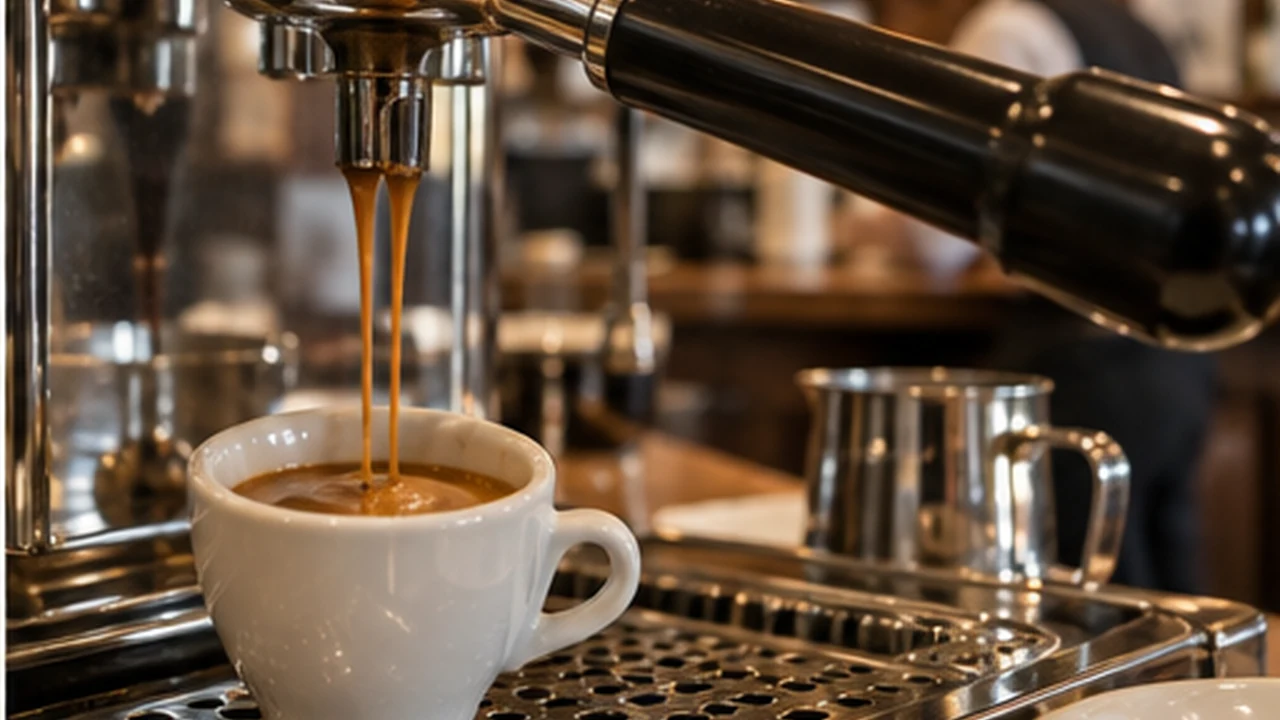
For an espresso-oriented blend, use 18 g ground coffee and start by collecting 36 g beverage in your cup. Adjust grind to reach a balanced extraction on your specific machine; around 25–35 seconds can be a useful initial observation, not a universal definition of espresso. Water passing through the puck is not measured by the same ratio as water poured into a filter brewer.
- Warm the machine and portafilter as recommended by its manufacturer. Dry the basket before dosing.
- Distribute grounds evenly, tamp consistently and weigh the beverage mass rather than guessing by crema volume.
- If the shot tastes sharp and thin, adjust grind finer in a small increment, keeping dose and target yield fixed.
- If it tastes harsh, try a slightly shorter beverage yield or a coarser grind. Check for uneven flow before attributing everything to roast.
Three-shot exercise: hold 18 g dose and grind fixed while tasting yields of 30 g, 36 g and 42 g. This changes both strength and extraction, so record which balance you prefer rather than declaring one ratio correct for every coffee.
Read the blend declaration
Check the roaster's stated country origins, Arabica/Robusta composition if disclosed, roast date and espresso recipe. “100% Arabica” does not by itself indicate freshness or quality; likewise, the presence of Robusta does not alone determine whether a blend is suitable for you. Ask for a decaffeinated option if caffeine intake is your primary concern.
Terminology and related guides
For botanical background, consult World Coffee Research's Arabica and Robusta catalog. Use our espresso calculator preset as a measured starting point, and our actual growing-origin pages for agricultural geography.