| Elevation / style | 1,800–2,200 m |
|---|---|
| Cultivar | Heirloom landraces |
| Common processing | Washed or natural |
| Flavor tendencies | Jasmine, bergamot, peach, tea-like body |
| Suggested brewer | V60 or Chemex |
| Starting ratio | 1:16.7 |
| Water temperature | 92–94°C |
| Grind | Medium-fine |
What the place name does—and does not—tell you
Yirgacheffe is a coffee-growing area in southern Ethiopia, frequently associated with delicate, aromatic washed coffees. It is not a cultivar or a guaranteed tasting profile. Lots labeled with the same place name can involve different farms, collection stations, harvests and drying practices. An identifiable washing station and a harvest year tell you more about a specific bag than the name alone.
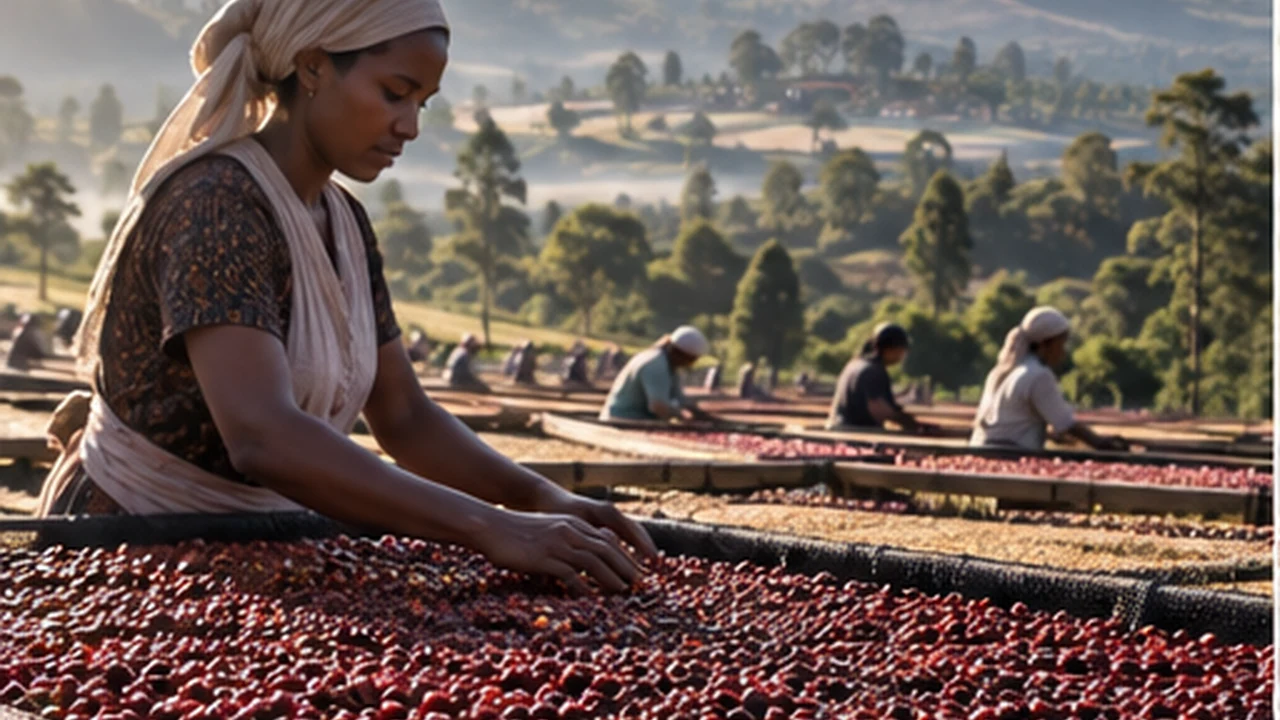
Washed processing generally removes fruit before drying the parchment. Natural processing dries the whole cherry, potentially producing a different fruit-forward impression. Neither method is intrinsically better. When you see “jasmine,” “lemon” or “tea-like” on a bag, read those as a roaster's sensory descriptions, not flavorings or promises that every cup will taste identical.
A filter recipe that protects delicate aromas
For a washed, light-roasted example, begin with 15 g coffee and 250 g water in a paper-filter dripper, approximately 93°C water and a medium-fine grind. Pour around 45 g to wet the grounds, wait 30–45 seconds, then add the remaining water in two steady pours. Use roughly 2½–3½ minutes as an observation, not a pass/fail target; different filters and grinders drain differently.
- Record coffee, water, grind setting and total time. Taste once hot and again when warm.
- If it is sharply acidic and weak, try grinding one small step finer with every other variable unchanged.
- If the finish becomes drying or the drawdown stalls, grind slightly coarser or reduce agitation.
- If florals are masked by a heavy roasted taste, consider a lighter roast rather than endlessly changing the recipe.
Comparison to run: prepare two 150 g cups with the same dose and grind, one at 91°C and one at 95°C. Keep pours as similar as possible. Note aroma, sweetness, acidity and finish without assuming the hotter brew must win.
Buying and evaluating a particular lot
Look for a named washing station or producer, processing method, roast date and harvest information when supplied. “Heirloom” on its own describes neither a single variety nor a measurable grade. Ethiopian planting material is diverse, so avoid treating that broad marketing word as a precise genetic identification. A traceable lot and transparent processing information are more actionable.
A fruit-heavy natural coffee may respond differently from the washed example above: start with the roaster's suggested brew recipe, then adjust grind before changing several variables. If your bag tastes different from this guide, that is useful information about your lot, not proof that it was mislabeled.
Further reading and scope
The World Coffee Research Arabica catalog explains why Ethiopian Arabica diversity cannot be reduced to one variety. The recipe here is a suggested starting experiment; no farm visit, lab test or original tasting panel is claimed.